Description
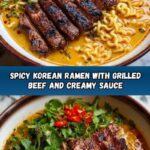
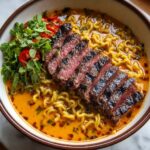
A vibrant and comforting bowl of Spicy Korean Ramen featuring tender grilled beef, a rich and flavorful chili-spiced broth, and a creamy gochujang sauce swirl. This recipe combines savory marinated ribeye steak with fresh vegetables, soft-boiled eggs, and classic Korean spices to deliver an authentic, hearty ramen experience perfect for spice lovers.
Ingredients
Scale
For the Grilled Beef:
- 350 g ribeye or sirloin steak, about 1.5–2 cm thick
- 1 tbsp soy sauce
- 1 tbsp Korean soy sauce for soup (optional, regular is fine)
- 1 tbsp mirin or rice wine
- 1 tbsp sesame oil
- 1 tsp gochujang (Korean chili paste)
- 1 tsp gochugaru (Korean chili flakes), adjust to taste
- 2 tsp brown sugar or honey
- 2 cloves garlic, finely minced
- 1 tsp ginger, finely grated
- 1 tbsp neutral oil (for grilling, if using pan)
- Salt and black pepper, to taste
For the Ramen Broth and Noodles:
- 2 packs fresh or instant ramen noodles (about 180–200 g total, not the seasoning packets)
- 4 cups (1 liter) low-sodium chicken or beef broth
- 1 cup water
- 1 tbsp neutral oil
- 3 cloves garlic, thinly sliced
- 1 tbsp ginger, thinly sliced or julienned
- 2 tbsp gochujang
- 1 tbsp gochugaru (more or less to taste)
- 1–2 tbsp soy sauce, to taste
- 1 tbsp fish sauce (optional, for depth)
- 1 tsp sugar
- 1 tbsp rice vinegar or apple cider vinegar
- 1 tsp toasted sesame oil
- Salt, to taste
For the Creamy Sauce Swirl:
- 1/3 cup mayonnaise (Japanese Kewpie preferred)
- 1/4 cup sour cream or plain Greek yogurt
- 2 tbsp heavy cream or milk (to loosen to drizzling consistency)
- 1 tbsp gochujang
- 1–2 tsp sriracha or other hot sauce (optional, for extra heat)
- 1 tsp lime juice or rice vinegar
- 1/2 tsp sugar or honey
- Pinch of salt
Toppings and Garnishes:
- 2 soft-boiled eggs (6–7 minutes), halved
- 1 cup mung bean sprouts (optional, blanched)
- 1 cup napa cabbage or bok choy, roughly chopped
- 1/2 cup shiitake or cremini mushrooms, sliced
- 2–3 green onions, finely sliced
- 1 small carrot, julienned
- 1 small sheet roasted seaweed (gim/nori), cut into strips
- 1–2 tbsp toasted sesame seeds
- Fresh red chili slices or jalapeño, to taste
- Fresh coriander or perilla leaves (optional)
- Lime wedges (optional, for serving)
Instructions
- Marinate the Beef: Pat the steak dry with paper towels and place it in a shallow dish or resealable bag. In a bowl, combine soy sauce, mirin, sesame oil, gochujang, gochugaru, brown sugar, minced garlic, grated ginger, and a pinch of black pepper until smooth. Pour the marinade over the steak, coating all sides well. Cover and marinate in the fridge for at least 30 minutes, ideally 1–2 hours, flipping halfway if possible.
- Prepare the Creamy Spicy Sauce: In a small bowl, whisk together mayonnaise, sour cream or yogurt, heavy cream or milk, gochujang, sriracha (if using), lime juice or rice vinegar, sugar or honey, and a pinch of salt until smooth and drizzleable. Adjust consistency with more cream or milk if needed. Cover and chill until ready to serve.
- Prepare Vegetables and Toppings: Soft-boil eggs by boiling water then cooking eggs for 6–7 minutes before transferring to ice water; peel once cool. Chop napa cabbage or bok choy, slice mushrooms, green onions, and chili, julienne the carrot. Rinse and blanch bean sprouts for 30 seconds if using. Cut seaweed into strips. Set all toppings aside.
- Make the Spicy Ramen Broth: Heat neutral oil in a pot over medium heat. Add sliced garlic and ginger; sauté 30–60 seconds until fragrant. Stir in gochujang and gochugaru, cooking 30 seconds to 1 minute until fragrant. Pour in broth and water, stirring to dissolve paste. Add soy sauce, fish sauce if using, sugar, and vinegar. Bring to gentle boil, then simmer 8–10 minutes. Adjust seasoning as needed. Stir in toasted sesame oil and keep warm.
- Grill or Sear the Marinated Beef: Remove steak from fridge 15 minutes prior to cooking. Preheat grill or skillet over medium-high heat. Lightly oil grates or pan. Grill or sear steak 3–4 minutes per side until medium-rare or preferred doneness. Rest steak 5–10 minutes, then slice thinly against the grain.
- Cook Noodles and Vegetables: Boil water in a separate pot. Cook ramen noodles per package instructions until just al dente (2–3 minutes for fresh). In the last minute, add napa cabbage or bok choy and mushrooms to blanch. Drain noodles and vegetables together and divide into two ramen bowls.
- Assemble the Ramen Bowls: Ladle hot spicy broth over noodles and vegetables to cover. Arrange sliced grilled beef on top. Add half a soft-boiled egg to each bowl. Garnish with bean sprouts, carrot, green onion, chili slices, seaweed strips, and toasted sesame seeds. Drizzle creamy spicy sauce decoratively over beef and noodles.
- Serve: Serve immediately while hot with extra creamy sauce, lime wedges, and chili flakes on the side. Encourage mixing creamy sauce into the broth for a rich, tangy, and smooth texture.
Notes
- Marinate the beef for at least 30 minutes, but 1–2 hours is best for deeper flavor.
- Adjust the spice levels by varying the amount of gochujang and gochugaru in both marinade and broth.
- Fresh ramen noodles are preferable but instant noodles also work well if fresh are unavailable.
- Soft-boiling eggs to 6–7 minutes will yield a slightly runny yolk; cook longer for firmer yolks.
- The creamy sauce can be customized with more or less spice and consistency to taste.
- For vegetarian version, omit beef and use vegetable broth, adding tofu or mushrooms instead.
- Leftover grilled beef can be stored refrigerated up to 2 days and reheated gently.