Description
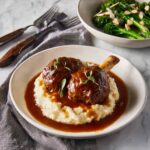
Tender lamb shanks slowly braised in a rich and flavorful port wine sauce with garlic, vegetables, and herbs, resulting in a hearty and comforting dish perfect for special gatherings or cozy dinners.
Ingredients
Scale
Lamb and Seasoning
- 4 lamb shanks (approx 400g/13oz each)
- Salt and pepper, to taste
- 2 tbsp olive oil, divided
Vegetables and Aromatics
- 2 garlic cloves, minced
- 1 onion, finely chopped (white, brown, or yellow)
- 1 celery stalk, finely chopped (optional but recommended)
- 1 carrot, finely chopped (optional but recommended)
Thickening and Liquids
- 3 tbsp (35g) flour
- 2 cups (500 ml) beef broth (or substitute chicken broth)
- 3 cups (750 ml) port wine
- 1 1/2 cups (375 ml) red wine (or additional beef broth)
- 3 tbsp (1/4 cup) tomato paste
Herbs
- 5 sprigs fresh thyme or 2 tsp dried thyme
- 3 dried bay leaves or 5 fresh bay leaves
- 4 stalks fresh parsley (optional)
- Fresh parsley, finely chopped, for garnish
Instructions
- Season the lamb: Generously season the lamb shanks with salt and pepper all over to enhance their flavor before cooking.
- Brown the lamb shanks: Heat 1 tablespoon of olive oil in a Dutch oven or heavy-based large pot over high heat. Add two lamb shanks and brown them on all sides, turning carefully, until a nice crust forms. Remove them and repeat with the remaining two shanks.
- Sauté vegetables and aromatics: Reduce the heat to medium and add the remaining tablespoon of olive oil. Add the minced garlic, chopped onion, carrot, and celery, sautéing for about 5 minutes until the onion softens and the vegetables are fragrant.
- Add the flour: Sprinkle the flour over the vegetable mixture and stir well to combine. This will help thicken the sauce later.
- Add liquids and seasonings: Pour in the beef broth, port wine, red wine, and tomato paste. Stir to mix; lumps from flour are okay as they will dissolve during cooking. Add the thyme sprigs, bay leaves, and parsley stalks if using.
- Return lamb to pot and simmer: Place the browned lamb shanks back into the pot, ensuring the meat is mostly submerged in the liquid. Bring everything to a gentle simmer, then lower the heat to medium-low and cover with a lid.
- Slow braise: Allow the lamb to simmer gently for 2 hours until the meat is tender and nearly falling off the bone. Remove the lid after 2 hours and continue simmering for an additional 30 minutes to slightly reduce the liquid.
- Remove the lamb: Carefully take the lamb shanks out of the pot and place them in a serving bowl, leaving the sauce behind.
- Optional – strain sauce: For a smoother sauce, strain the liquid from the Dutch oven into a bowl, pressing the solids to extract flavor. Pour the strained sauce back into the pot.
- Skim fat: Remove any excess fat from the surface of the sauce for a cleaner finish.
- Reduce sauce: Increase the heat to medium-high and cook the sauce until it reduces by half and thickens to a syrupy consistency.
- Reheat lamb and serve: Return the lamb shanks and any resting juices into the thickened sauce to warm through. Serve immediately with creamy mashed potatoes, garnished with freshly chopped parsley.
Notes
- Note 1: Lamb shanks weighing around 400g/13oz each are ideal for this recipe.
- Note 2: Use a good quality port wine for the best flavor impact; it adds sweetness and depth.
- Note 3: Red wine can be substituted with more beef broth if preferred, though wine adds complexity.
- Note 4: Slow simmering for 2 hours is essential to tenderize the meat properly.
- Note 5: Straining the sauce is optional but recommended for a refined texture.