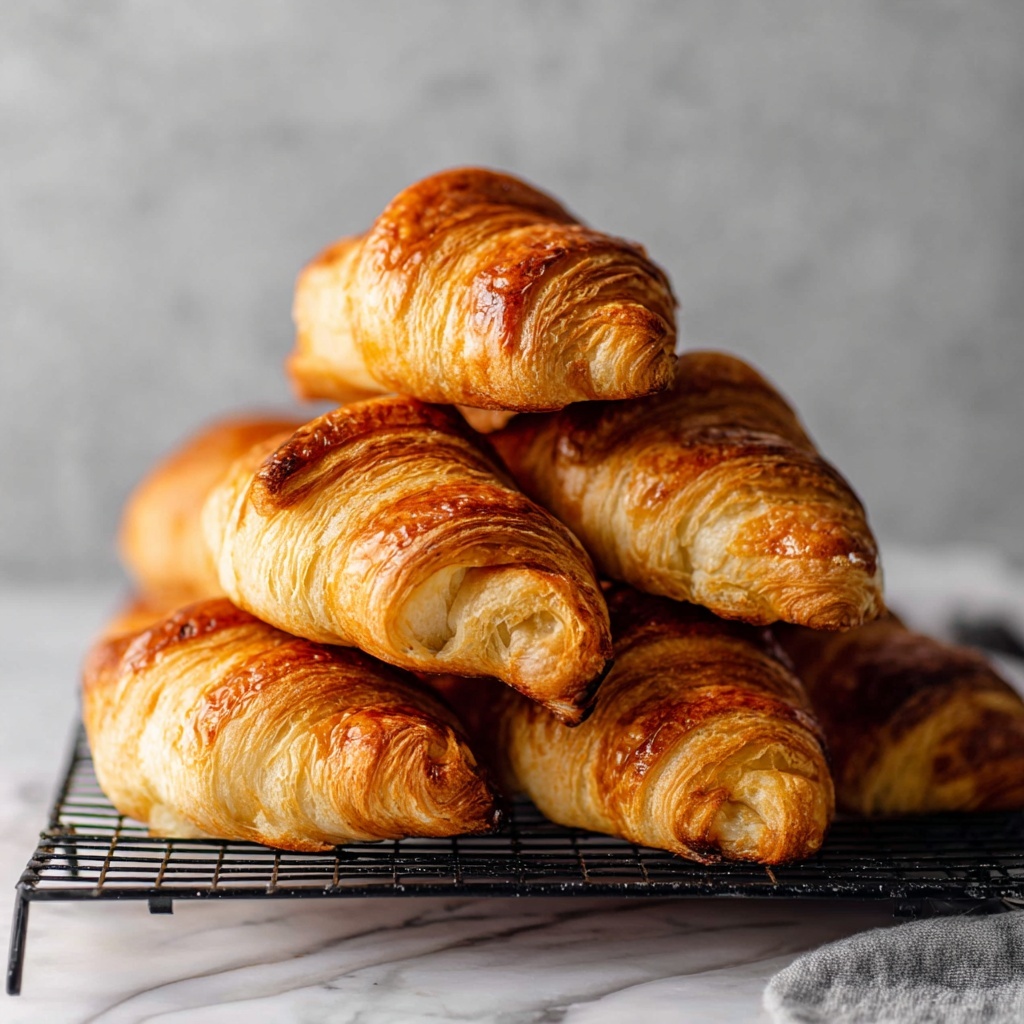
The magic of freshly baked croissants is truly unbeatable. These flaky, buttery pastries melt in your mouth and turn any morning into a celebration. If you’ve ever wondered about unlocking the secret behind those irresistibly soft layers and golden crusts, then you’re in the right place. Learning How to Make Croissants Recipe at home is simpler than you might think, and the satisfaction you’ll feel rolling out dough and watching it rise is absolutely worth the effort. Let me guide you through every step so you can impress everyone with croissants fresh from your own oven.

Ingredients You’ll Need
Every ingredient in this recipe is simple, yet each plays a critical role in creating the perfect croissant. From rich butter that gives that unmistakable flakiness to the yeast that makes the dough rise beautifully, these essentials come together to build layers of flavor and texture.
- Whole milk (1⅓ cup, lukewarm): Helps activate the yeast and tenderizes the dough for a soft crumb.
- Active dry yeast (2¼ teaspoons): Essential for that airy, risen texture that makes croissants so light.
- Granulated sugar (3 tablespoons): Feeds the yeast and adds a touch of sweetness to balance the flavors.
- Kosher salt (1½ teaspoons): Enhances all the other flavors without overpowering the delicate buttery notes.
- Unsalted butter (3 tablespoons, room temperature): Incorporated into the dough itself for richness.
- All-purpose flour (3⅔ cups): Provides the structure that holds those classic croissant layers together.
- Unsalted butter (1¼ cups, for laminating): The star of the show—European-style recommended for its higher fat content which creates those perfect flaky layers.
- One large egg: Adds richness and is used to brush the croissants for that glossy, golden finish.
How to Make How to Make Croissants Recipe
Step 1: Prepare the Yeast Dough
Start by warming your milk to a comfortable 100-110°F—it’s just right to wake up the yeast without killing it. Stir in the yeast and sugar gently, then let it sit for a few minutes until it’s frothy and alive. This is the foundation that will give your croissants their light, airy texture. While waiting, mix the flour, salt, and softened butter. Once the yeast mixture bubbles, add everything together and knead until smooth and elastic. This dough will be the canvas for the beautiful layers to come.
Step 2: Chill the Dough
Cover your dough and place it in the fridge for at least 30 minutes. Chilling relaxes the gluten, which will make rolling and folding easier and prevent the dough from shrinking back. Patience here will pay off with buttery layers that don’t toughen up while baking.
Step 3: Prepare the Butter Block
While the dough chills, prepare your butter block. Using cold butter, but slightly softened, pound and roll it into a neat square about 7 inches across. This block will be folded into the dough repeatedly, creating the signature layers. European-style butter with higher fat content is best, as it contributes to the ideal flaky texture we all crave.
Step 4: Laminate the Dough
Roll out the dough into a large rectangle, then place the butter block on one half and fold the dough over, sealing the butter inside. The process of rolling and folding the dough three times, with chilling between folds, distributes the butter evenly and creates multiple layers. This lamination step is where the magic of croissants truly happens, turning simple ingredients into a masterpiece.
Step 5: Shape and Proof the Croissants
After your final roll-out, cut the dough into long triangles. Roll each triangle snugly from the wide end to the tip to form the classic croissant shape. Place them on baking trays, curve the ends slightly for that crescent shape, and let them proof until doubled in size. The rise time can take from 1 to 2 hours depending on your kitchen temperature but is essential for that light texture.
Step 6: Bake to Perfection
Brush the croissants with a beaten egg wash for that irresistible golden shine. Bake in a preheated oven at 375°F for about 15 minutes or until puffed and deep golden brown. The aroma that fills your kitchen at this point is unbeatable—a sign that all your efforts will soon be rewarded with flaky, buttery bliss.
How to Serve How to Make Croissants Recipe

Garnishes
While croissants are heavenly on their own, a light dusting of powdered sugar or a gentle brush of melted honey before serving adds a sweet contrast to their buttery layers. For a savory twist, sprinkle a touch of flaky sea salt or smoked paprika for an adventurous palate.
Side Dishes
Pair your croissants with fresh fruit preserves, creamy cheeses like brie or goat cheese, or even a classic café au lait. These sides complement the richness and flaky texture perfectly, making breakfast or brunch a truly indulgent experience.
Creative Ways to Present
Arrange croissants in a basket lined with a soft linen cloth for a charming rustic look, or stack them pyramid-style on a pretty cake stand to impress guests. You can also slice them for delicious sandwiches filled with ham and cheese, turning these pastries into a versatile meal or snack.
Make Ahead and Storage
Storing Leftovers
Cool leftover croissants completely, then store them in an airtight container or resealable bag at room temperature for up to two days. This keeps them from drying out while preserving their flakiness as much as possible.
Freezing
If you want to enjoy these croissants later, freeze them unbaked after shaping or baked ones after cooling. Wrap tightly in plastic wrap and foil, then place in a freezer-safe bag. They will keep beautifully for up to two months.
Reheating
To bring croissants back to life, reheat them in a 350°F oven for about 5 to 7 minutes. This warms the inside without making the crust soggy, giving you that fresh-out-of-the-oven feeling all over again.
FAQs
Can I use instant yeast instead of active dry yeast?
Absolutely! Instant yeast can be used; just mix it directly with the flour and reduce the rise time slightly since it acts faster than active dry yeast.
What’s the secret to flaky layers in croissants?
The key is the lamination process—folding and rolling cold butter into the dough multiple times creates thin layers of butter and dough which puff up beautifully in the oven.
Can I make croissants without European-style butter?
You can, but European-style butter has a higher fat content and less water which helps produce better flakiness and richer flavor. If unavailable, use the best quality unsalted butter you can find.
How long can I let croissants proof?
Typically, croissants need 1 to 2 hours to double in size. Proofing longer at cooler temperatures can be done overnight in the fridge but requires adjustments in baking time and temperature.
Can I add fillings to croissants before baking?
Definitely! Popular fillings include chocolate, almond paste, or ham and cheese. Add them by placing a small amount at the wide end of your dough triangles before rolling them up.
Final Thoughts
Learning How to Make Croissants Recipe is like unlocking a little kitchen treasure—you get to indulge in the delightful smell and taste of bakery-quality pastries made right at home. With a bit of patience and love, you’ll create buttery, flaky croissants that turn any morning into a special occasion. Trust me, once you try these, store-bought croissants will never feel quite the same again. So grab your rolling pin and get ready to bake some magic!
Print
How to Make Croissants Recipe
- Prep Time: 90 minutes
- Cook Time: 15 minutes
- Total Time: 1 hour 45 minutes
- Yield: 16 croissants
- Category: Breakfast Pastry
- Method: Baking
- Cuisine: French
Description
Learn how to make classic, flaky croissants from scratch with this detailed step-by-step recipe. Combining a rich, buttery dough and careful lamination techniques, this recipe yields 16 perfectly golden, tender croissants with a crisp outer crust and soft, airy interior – ideal for breakfast or brunch.
Ingredients
Dough Ingredients
- 1⅓ cup whole milk (303 grams), lukewarm (100-110°F)
- 2¼ teaspoons active dry yeast (7 grams / 1 envelope)
- 3 tablespoons granulated sugar (38 grams)
- 1½ teaspoons kosher salt (5 grams)
- 3 tablespoons unsalted butter (42 grams), room temperature (⅜ stick)
- 3⅔ cups all-purpose flour (440 grams)
- 1 large egg (50 grams)
Butter Block for Laminating
- 1¼ cups unsalted butter (283 grams), room temperature (2½ sticks, European-style recommended)
Instructions
- Activate Yeast: In a small bowl, combine the lukewarm milk with the active dry yeast and granulated sugar. Stir gently and let it sit for about 5-10 minutes until it becomes frothy, indicating the yeast is active.
- Prepare Dough: In a large mixing bowl, whisk together the flour and kosher salt. Add the softened unsalted butter, the frothy yeast mixture, and mix until a rough dough forms. Knead the dough on a lightly floured surface for about 8-10 minutes until smooth and elastic. Shape into a ball.
- First Proof: Place the dough in a lightly oiled bowl, cover with plastic wrap or a damp towel, and let it rise in a warm place until doubled in size, about 1 hour.
- Prepare Butter Block: Place the room temperature butter between two sheets of parchment paper and use a rolling pin to flatten it into a thin, even square about 8×8 inches. Chill in the fridge if it softens.
- Lamination Process: Roll the dough into a 16×10 inch rectangle on a lightly floured surface. Place the butter block on two-thirds of the dough, fold the uncovered third over the butter, then fold the remaining third over the top, like a letter. Roll the dough out again to a 16×10 rectangle and fold into thirds. Repeat this rolling and folding process 3 times, chilling the dough for 20-30 minutes between each turn to keep the butter firm.
- Shape Croissants: After the final fold and rest, roll the dough into a large rectangle about 20×10 inches. Cut the dough into 16 triangles. Stretch each triangle slightly and roll from the wider end towards the tip, forming the classic crescent shape. Place on a parchment-lined baking sheet with tips tucked underneath.
- Second Proof: Cover the croissants lightly with plastic wrap and let them rise at room temperature until puffy and almost doubled, about 1 to 2 hours.
- Egg Wash and Bake: Preheat the oven to 375°F (190°C). Beat the large egg and brush the tops of the croissants gently to give them a shiny, golden finish. Bake for 15 minutes or until deeply golden brown and crisp on top.
- Cool and Serve: Let the croissants cool on a wire rack for at least 15 minutes before serving to allow the interior to set and flavors to develop fully.
Notes
- Use European-style butter with higher fat content for the best lamination and flavor.
- Keeping the butter block cold but pliable is key to achieving flaky layers.
- Proofing times can vary depending on room temperature; avoid overproofing to prevent loss of structure.
- Chilling the dough between folds prevents the butter from melting and keeps layers distinct.
- Store leftover croissants in an airtight container and refresh in a warm oven before eating for best texture.