Description
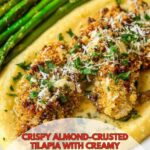
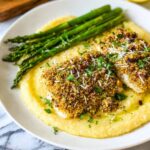
This Almond-Crusted Honey Dijon Tilapia with Creamy Polenta is a flavorful and elegant dish featuring tender tilapia fillets coated in a crunchy Honey Dijon almond crust, baked to perfection, and served atop a rich and creamy parmesan polenta. A tangy Dijon mustard sauce with a hint of honey and vinegar complements the fish beautifully, making it a perfect meal for weeknights or special occasions.
Ingredients
Scale
Fish and Coating
- 4 6-oz tilapia filets, patted dry
- Salt and pepper, to taste
- 2 tablespoons flour
- 1 egg
- 2 teaspoons Dijon mustard
- 1 tablespoon honey
- 1 tablespoon water
- 1 cup Blue Diamond Honey Dijon Almonds
- 1/2 cup parmesan cheese, shredded
Creamy Polenta
- 2 and 2/3 cups chicken broth
- 1/2 teaspoon dry mustard
- 2/3 cup dry polenta
- 1/4 cup parmesan cheese, shredded
- 1/4 teaspoon oregano
- 1/4 teaspoon salt
- 1 tablespoon cream
Dijon Sauce
- 1/3 cup Dijon mustard
- 1 tablespoon Worcestershire sauce
- 1/4 teaspoon dried thyme
- 1 tablespoon vinegar
- 2 tablespoons honey
Instructions
- Preheat Oven: Preheat your oven to 400 degrees F to prepare for baking the coated tilapia fillets.
- Season and Flour Fish: Place the tilapia filets on a dry work surface. Sprinkle both sides generously with salt and pepper. Sprinkle 1 tablespoon flour on one side, flip, and repeat seasoning and flour on the other side.
- Make Egg Wash: In a shallow plate or pie plate, whisk together 1 egg, 2 teaspoons Dijon mustard, 1 tablespoon honey, and 1 tablespoon water until combined.
- Prepare Nut Coating: Using a food processor, pulse 1 cup Honey Dijon Almonds until finely ground. Add 1/2 cup shredded parmesan cheese and pulse just to combine. Transfer this mixture to a separate shallow dish.
- Coat Fish: Dip each tilapia filet into the egg mixture, ensuring it’s fully coated. Then transfer to the nut mixture, gently pressing to coat all sides thoroughly.
- Bake Fish: Spray a baking sheet lightly with nonstick spray. Arrange the coated filets in a single layer and bake in the preheated oven for 12-14 minutes, or until the crust is golden brown and the fish flakes easily with a fork.
- Cook Polenta: Meanwhile, in a medium saucepan, bring 2 and 2/3 cups chicken broth and 1/2 teaspoon dry mustard to a boil. Slowly whisk in the 2/3 cup dry polenta, then reduce heat to low.
- Simmer Polenta: Stir the polenta every couple of minutes for about 20 minutes until it thickens. Stir in 1/4 cup shredded parmesan, 1/4 teaspoon salt, 1/4 teaspoon oregano, and 1 tablespoon cream. Keep warm and stir occasionally if tilapia is not yet ready to serve.
- Prepare Sauce: In a small saucepan, combine 1/3 cup Dijon mustard, 1 tablespoon Worcestershire sauce, 1/4 teaspoon dried thyme, 1 tablespoon vinegar, and 2 tablespoons honey. Heat gently until hot and well combined.
- Serve: Plate the creamy polenta, place the baked almond-crusted tilapia on top, and drizzle generously with the warm Dijon sauce. Serve immediately for best texture and flavor.
Notes
- Ensure the tilapia filets are patted dry to help the coating adhere better.
- If you don’t have Honey Dijon almonds, substitute with plain almonds and adjust honey in egg wash slightly to add sweetness.
- Polenta thickens as it cools; serve immediately or keep warm and stir occasionally.
- For a vegetarian option, substitute vegetable broth for chicken broth and consider using a plant-based parmesan alternative.
- Leftovers can be refrigerated for up to 2 days but are best enjoyed fresh.