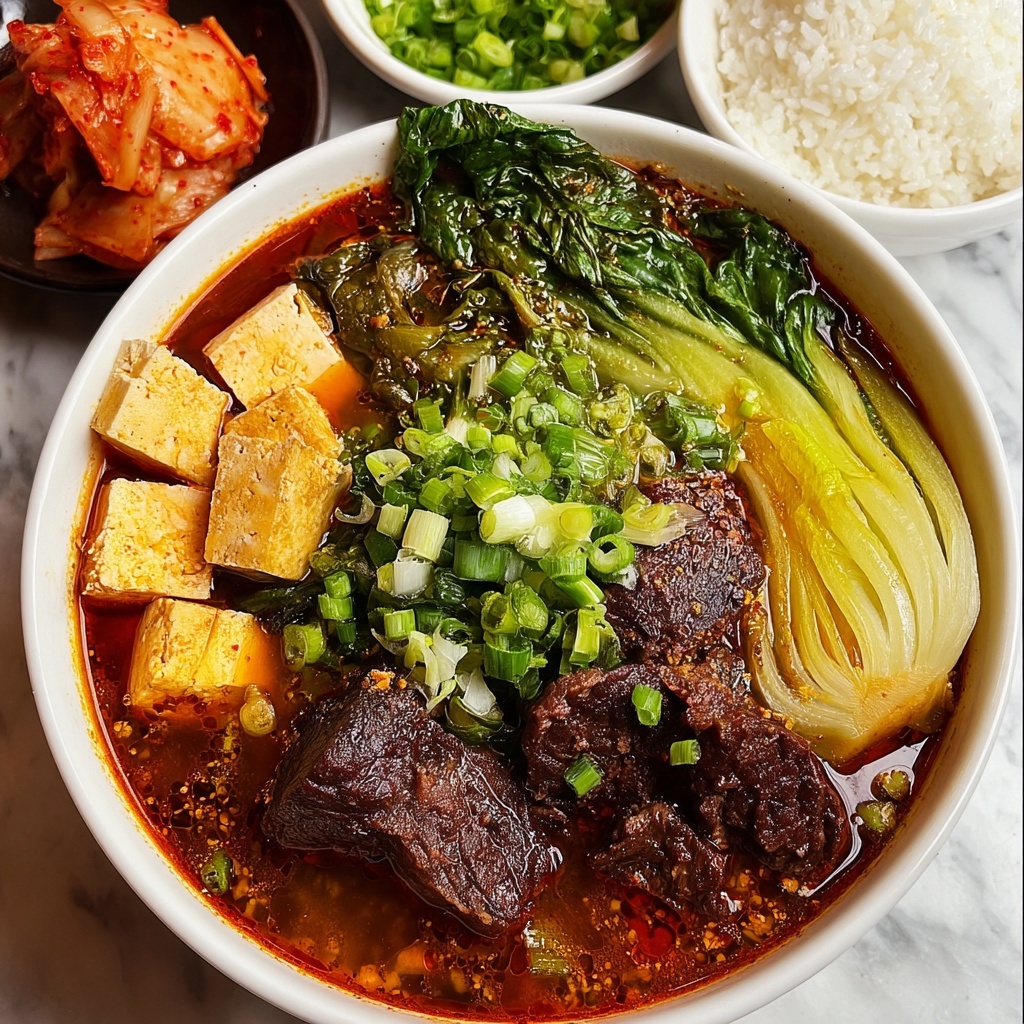
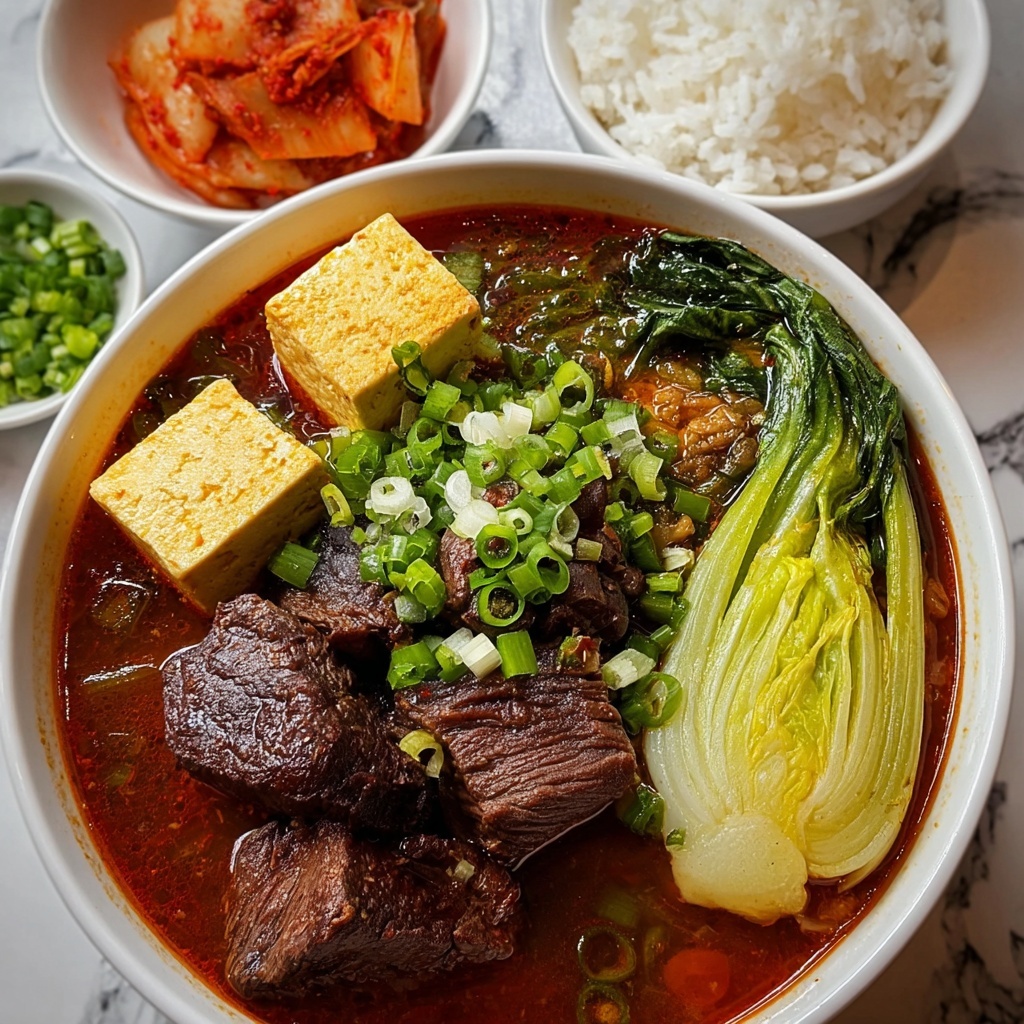
If you are craving a comforting, flavorful, and hearty dish that perfectly captures the essence of chilly evenings, this Korean Winter Soup Recipe is exactly what you need. With tender beef brisket simmered to perfection alongside crisp napa cabbage, silky tofu, and the delicious heat of gochujang and gochugaru, this soup wraps you up in warm, layered flavors that feel like a cozy hug in a bowl. It is a brilliant combination of spicy, savory, and umami notes that will quickly become a wintertime favorite in your home kitchen.
Ingredients You’ll Need
Don’t let the ingredient list intimidate you—each element here is simple yet essential, working harmoniously to create a beautiful balance of textures, colors, and bold Korean flavors. From the tender beef brisket providing rich depth to the spicy kick from Korean red pepper paste, every ingredient plays a role in making this soup unforgettable.
- Beef brisket (1 pound): Choose well-marbled brisket for tender, flavorful meat after slow simmering.
- Water (8 cups): The base that slowly extracts all the hearty goodness from the beef and vegetables.
- Soy sauce (3 tablespoons): Adds salty depth and balances the spicy notes beautifully.
- Korean red pepper paste, gochujang (2 tablespoons): Provides that signature Korean spicy-sweet flavor and vibrant red color.
- Korean red pepper powder, gochugaru (1 tablespoon): Adds smokiness and a nuanced spicy heat.
- Garlic (4 cloves, minced): Infuses the broth with aromatic warmth and complexity.
- Onion (1 large, chopped): Sweetens and deepens the soup as it softens.
- Napa cabbage (2 cups, sliced): Adds crunch, color, and balances richness with its fresh bite.
- Firm tofu (1 block, 14 oz, cubed): Gives creaminess and a satisfying texture contrast.
- Daikon radish (1 cup, sliced): Brings subtle sweetness and a gentle crunch that brightens the soup.
- Sesame oil (2 tablespoons): Delivers a nutty fragrance that finishes the soup beautifully.
- Green onions (2, sliced): Adds freshness and a mild onion flavor when sautéed in sesame oil.
- Salt and pepper: Essential seasonings to adjust and perfect the overall taste.
- Cooked white rice (for serving): A classic Korean pairing that complements and soaks up every drop.
How to Make Korean Winter Soup Recipe
Step 1: Simmer the Beef Brisket
Start by placing your beef brisket and water into a large pot, bringing it quickly to a boil over high heat. Once boiling, reduce the heat to a gentle simmer and let it cook uncovered for about 30 minutes until the meat becomes tender. This slow simmer is the heart of the soup, where deep, savory flavors are developed.
Step 2: Skim Impurities for a Clear Broth
As the brisket simmers, you’ll notice foam and particles rising to the surface. Skim these off carefully using a ladle or mesh spoon. This simple step keeps your broth clean and clear, improving both the look and taste of the soup.
Step 3: Add the Flavorful Sauces and Garlic
Next, stir in the soy sauce, gochujang, gochugaru, and minced garlic directly into the pot. These ingredients build the bold, spicy, and slightly sweet base that defines this Korean Winter Soup Recipe. Mixing well ensures all the flavors meld together harmoniously.
Step 4: Incorporate the Vegetables and Tofu
Toss in the chopped onion, napa cabbage, cubed tofu, and daikon radish. Continue simmering for another 20 minutes to allow the vegetables to soften yet retain some bite, and for the tofu to soak up those spicy, savory juices.
Step 5: Sauté Green Onions in Sesame Oil
In a separate small pan, warm the sesame oil over medium heat. Add the sliced green onions and sauté until fragrant and softened, which takes just a couple of minutes. Pour this aromatic mixture right into the soup to add an incredible layer of toasted nuttiness and fresh onion flavor.
Step 6: Final Seasoning Adjustments
Season your soup with salt and pepper to taste. This last touch is crucial because it allows you to personalize the soup’s seasoning perfectly to your liking.
Step 7: Serve Hot with Steamed Rice
The best way to enjoy this Korean Winter Soup Recipe is hot, ladled into bowls alongside fluffy steamed white rice. The rice helps mellow the spicy kick and makes each mouthful comforting and filling.
How to Serve Korean Winter Soup Recipe
Garnishes
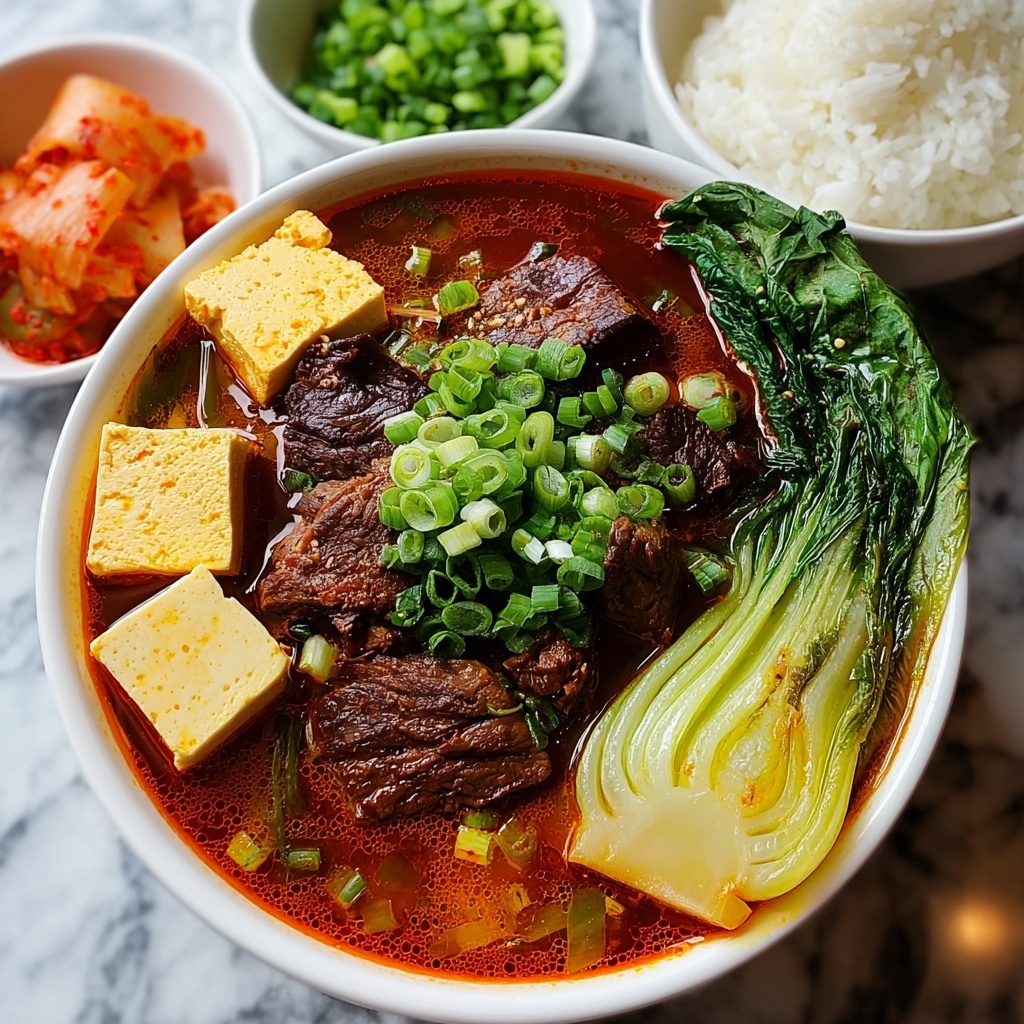
Simple garnishes can elevate your presentation and flavor. Sprinkle a few more sliced green onions on top or add a pinch of toasted sesame seeds for a subtle crunch and extra aroma. If you like extra heat, a drizzle of chili oil or fresh sliced chili peppers can also be wonderful additions.
Side Dishes
Korean meals are all about balance, so pairing your soup with classic banchan (side dishes) like kimchi, pickled radishes, or seasoned spinach will round out the meal beautifully. These sides offer refreshing and fermented contrasts that highlight the rich soup.
Creative Ways to Present
If you want to impress guests or make family meals fun, serve the soup in rustic Korean stone bowls, which keep the soup piping hot longer. You can also present small bowls of rice separately, letting everyone customize their bowls by mixing and matching toppings and sides.
Make Ahead and Storage
Storing Leftovers
This soup keeps wonderfully in an airtight container in the refrigerator for up to 3 days. The flavors further develop as it sits, making it even tastier the next day. Just be sure to cool it before refrigerating to maintain freshness.
Freezing
Feel free to freeze this Korean Winter Soup Recipe in portion-sized containers for up to 2 months. When freezing, avoid adding the sautéed green onions ahead of time; it’s best to add them fresh after reheating to preserve their flavor and texture.
Reheating
Reheat the soup gently on the stove over medium-low heat, stirring occasionally until warmed through. Re-adding a splash of water or broth can help loosen the soup if it has thickened in the fridge or freezer.
FAQs
Can I use other cuts of beef instead of brisket?
Absolutely! While brisket works wonderfully for its tenderness and flavor, you can substitute chuck or short ribs. Just adjust the cooking time accordingly to ensure the meat becomes tender.
Is this soup very spicy?
The heat can be adjusted depending on your taste by varying the amount of gochujang and gochugaru. If you prefer milder flavors, start with less and add more gradually while cooking.
Can I make a vegetarian version?
Yes! Replace the beef with mushrooms or extra tofu, and use vegetable broth instead of water for added richness. Omit soy sauce if you prefer a lower-sodium version or substitute with tamari.
What is the best way to store leftovers for flavor preservation?
Store leftovers in airtight containers, and keep the tofu and fresh toppings separate if possible. This helps maintain the texture of softer ingredients and keeps the soup tasting fresh.
Can I add noodles to this Korean Winter Soup Recipe?
Definitely! Adding noodles is a fantastic way to make the soup more filling. Korean sweet potato noodles or rice noodles work well; add them during the last few minutes of cooking to avoid overcooking.
Final Thoughts
This Korean Winter Soup Recipe is more than just a soup; it’s a warm invitation to embrace the cozy moments that winter offers. Every comforting spoon carries the heart of Korean flavors, perfect for family dinners or whenever you need a pick-me-up. I encourage you to try this recipe and experience how a simple bowl of soup can become a beloved seasonal staple. Happy cooking and savor every bite!
Print
Korean Winter Soup Recipe
- Prep Time: 0h 20m
- Cook Time: 1h 0m
- Total Time: 1h 20m
- Yield: 4 servings
- Category: Soup
- Method: Stovetop
- Cuisine: Korean
Description
This hearty Korean Winter Soup features tender beef brisket simmered with a flavorful blend of soy sauce, gochujang, and gochugaru, combined with fresh vegetables like napa cabbage, daikon radish, and tofu. Finished with fragrant sesame oil and sautéed green onions, this warming soup is perfect for chilly days and is traditionally served with steamed white rice.
Ingredients
Beef and Broth
- 1 pound beef brisket, cut into 2-inch pieces
- 8 cups water
Seasonings and Sauces
- 3 tablespoons soy sauce
- 2 tablespoons Korean red pepper paste (gochujang)
- 1 tablespoon Korean red pepper powder (gochugaru)
- 4 cloves garlic, minced
Vegetables and Tofu
- 1 large onion, chopped
- 2 cups napa cabbage, sliced
- 1 block (14 oz) firm tofu, cubed
- 1 cup daikon radish, sliced
Finishing Touches
- 2 tablespoons sesame oil
- 2 green onions, sliced
- Salt and pepper to taste
To Serve
- Cooked white rice, for serving
Instructions
- Simmer the Beef: In a large pot, add the beef brisket and water. Bring it to a boil over high heat, then reduce to a simmer and cook for about 30 minutes until the beef becomes tender.
- Skim the Broth: Carefully skim off any impurities that rise to the surface during simmering to ensure a clear soup broth.
- Add Seasonings: Stir in the soy sauce, Korean red pepper paste (gochujang), Korean red pepper powder (gochugaru), and minced garlic into the pot. Mix well to blend all the flavors.
- Add Vegetables and Tofu: Add the chopped onion, sliced napa cabbage, cubed tofu, and sliced daikon radish to the pot. Continue to simmer the soup for another 20 minutes to allow the vegetables to soften and flavors to meld.
- Sauté Green Onions: While the soup simmers, heat sesame oil in a small pan over medium heat. Add the sliced green onions and sauté until fragrant. Then, stir this aromatic mixture into the soup.
- Season to Taste: Taste the soup and season with salt and pepper as needed. Adjust the seasoning to your preference.
- Serve: Ladle the hot soup into bowls and serve alongside steamed white rice for a comforting and satisfying meal.
Notes
- Skimming impurities is key for a clear and appealing broth.
- You can adjust the level of spiciness by varying the amount of gochujang and gochugaru.
- To make the soup more hearty, add additional vegetables like mushrooms or zucchini as desired.
- Firm tofu works best for maintaining shape in this soup, but you can also use silken tofu for a softer texture.