If you’ve ever thought making pie crust from scratch was intimidating, get ready to have your mind changed forever with this Easy Homemade Pie Crust Recipe. It’s that perfect balance of flaky, buttery, and tender that forms the foundation of every great pie. With simple pantry ingredients and a straightforward technique, this crust turns any pie into a heartfelt homemade masterpiece. Whether you’re preparing a classic apple pie or experimenting with your own filling, mastering this recipe means you’ll always have a reliable, delicious base to build on.
Ingredients You’ll Need
The beauty of this Easy Homemade Pie Crust Recipe lies in its simplicity. Just a handful of essential ingredients come together to create incredible texture and flavor, making it accessible for bakers of all skill levels.
- 2 1/2 cups all-purpose flour: The backbone of the crust, providing structure without toughness.
- 1/2 teaspoon salt: Enhances the flavor and balances the richness of the butter.
- 3/4 cup cold unsalted butter (cubed): The secret to that flaky texture, keep butter cold for the best results.
- 1 teaspoon apple cider vinegar: Helps tenderize the dough and adds a subtle depth of flavor.
- 1/2 cup ice-cold water: Just enough moisture to bring the dough together without making it sticky.
How to Make Easy Homemade Pie Crust Recipe
Step 1: Blend Dry Ingredients and Butter
Start by mixing your all-purpose flour and salt in a large bowl. Then, add the cold, cubed butter. Use a pastry blender or even your fingers to work the butter into the flour until the mixture looks like coarse crumbs. This is crucial because the tiny bits of butter create those irresistible pockets of flakiness in your crust.
Step 2: Make Pastry Dough
Next, combine the apple cider vinegar with the ice-cold water. Gradually pour this liquid into the flour and butter mixture. Gently mix until the dough just starts to come together—it will be crumbly but should hold when pressed. Avoid kneading or over-mixing, as that can make the crust tough. Form the dough into two disks, wrap each in foil or plastic wrap, and chill in the fridge for about an hour. Chilling helps relax the gluten and firms up the butter for rolling.
Step 3: Roll Out the Crust
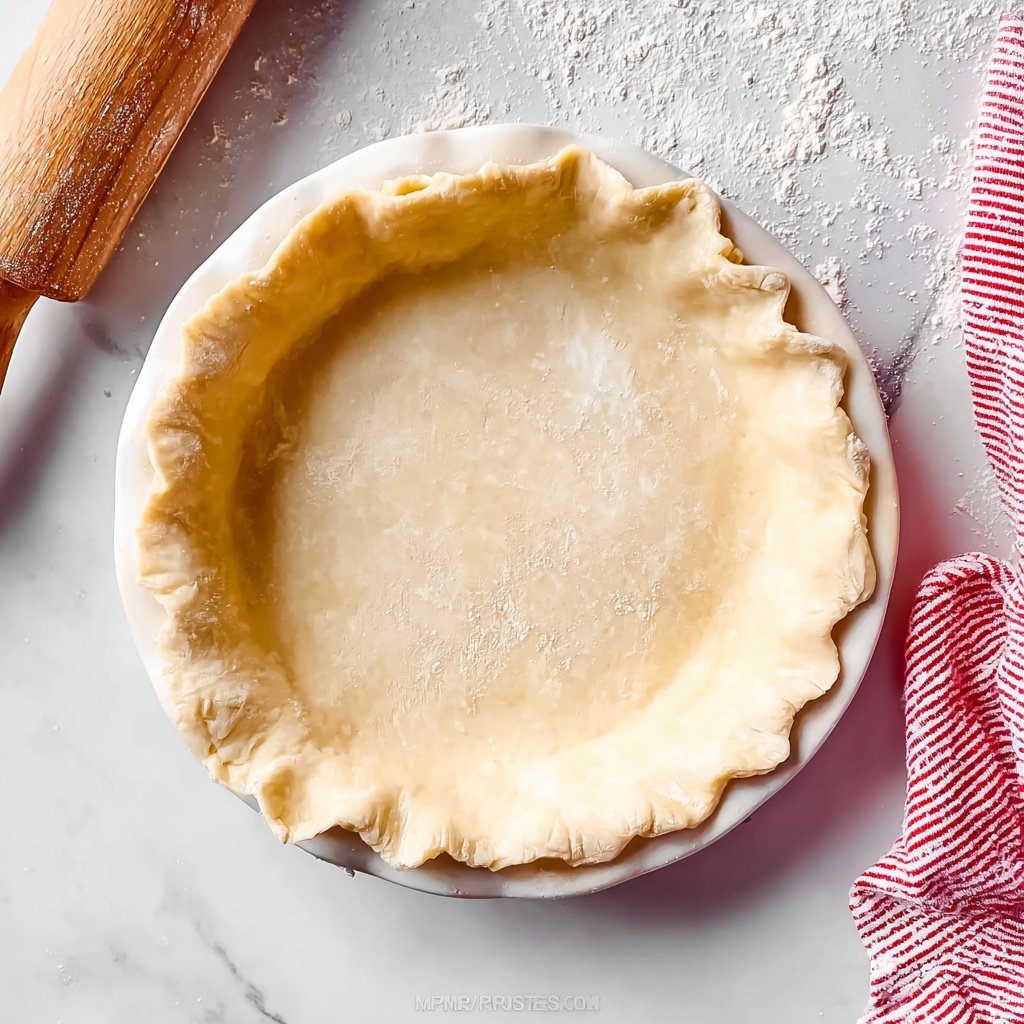
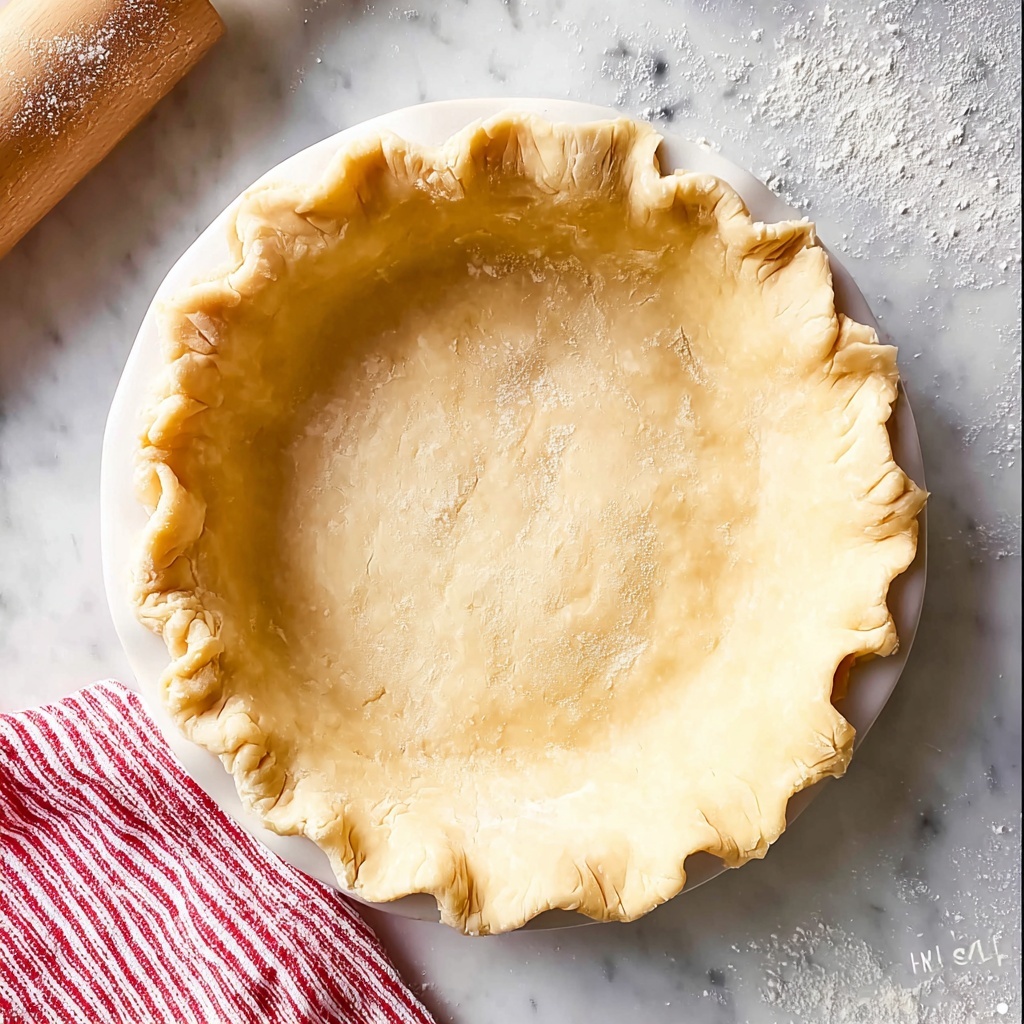
Take one dough disk and sandwich it between two sheets of baking parchment. Roll it out into a circle slightly larger than your 9-inch pie dish. The parchment paper helps keep the dough from sticking and makes transferring it effortless. Fit this rolled-out crust into your greased pie dish and pop it back into the fridge while you prepare your pie filling or the top crust for a double crust pie. Keeping the dough chilled ensures it bakes up tender and flakey.
How to Serve Easy Homemade Pie Crust Recipe
Garnishes
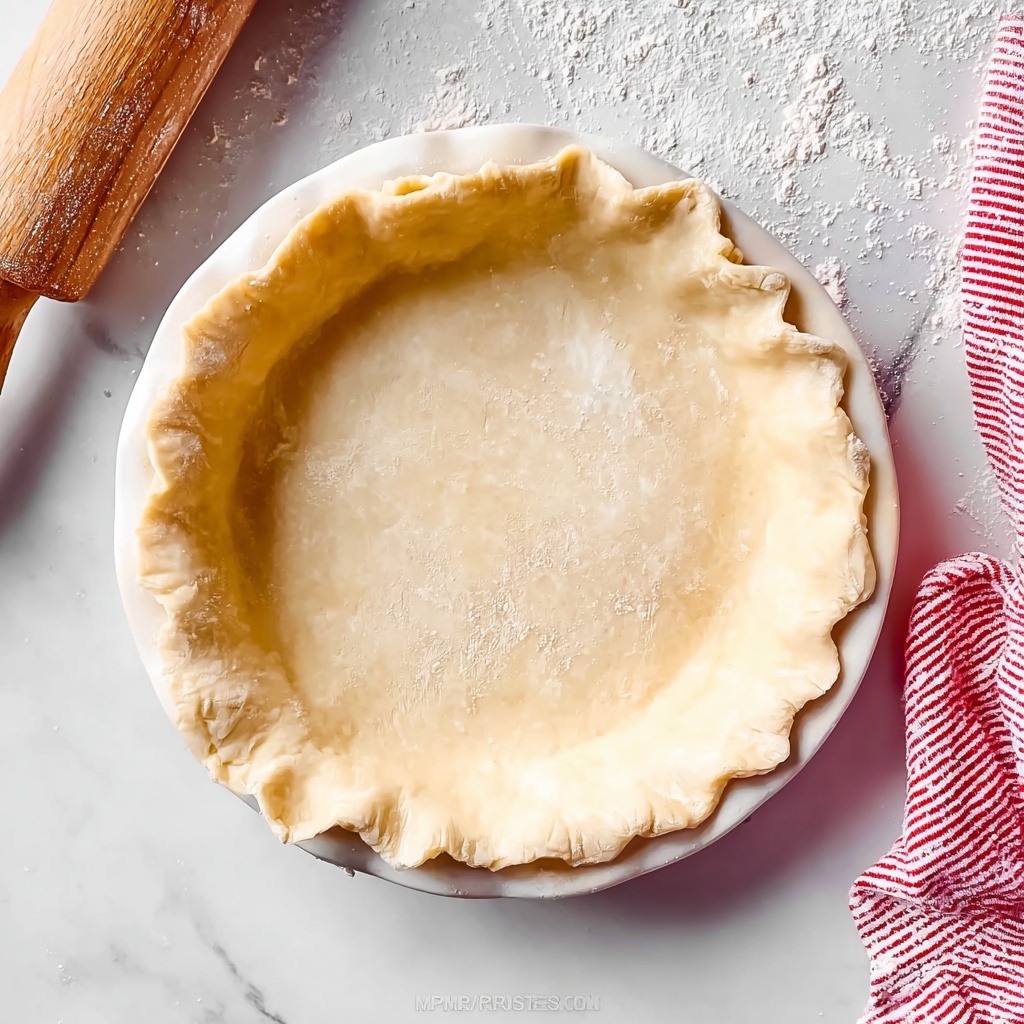
Once your pie is baked, simple garnishes can elevate the presentation wonderfully. Consider brushing the crust with a light wash of honey or an egg wash before baking for a golden sheen. After baking, a dusting of powdered sugar or a sprinkle of cinnamon can add a lovely touch depending on your pie filling.
Side Dishes
This pie crust sets the stage for both sweet and savory pies, so sides can vary. For savory pies, fresh green salads with tangy vinaigrettes create a refreshing balance. Sweet pies pair beautifully with a scoop of vanilla ice cream or a dollop of freshly whipped cream to add creaminess that complements the flaky crust.
Creative Ways to Present
Don’t limit yourself to a plain pie edge—try crimping the edges, creating lattice tops, or using cookie cutters to cut out fun shapes from the extra dough. These personal touches not only look impressive but make the pie feel like a festive centerpiece for any gathering.
Make Ahead and Storage
Storing Leftovers
If you happen to have extra pie crust or a baked pie, wrap leftovers tightly in plastic wrap or aluminum foil and store in the fridge for up to 3 days. This keeps the crust from drying out and preserves its delightful texture.
Freezing
This Easy Homemade Pie Crust Recipe freezes wonderfully. Wrap the dough disks individually in plastic wrap and place them in a freezer bag. They’ll keep for up to 2 months, making it super convenient to have pie crust on hand whenever the craving strikes. Just thaw overnight in the refrigerator before rolling out.
Reheating
To reheat baked pies, cover loosely with foil and warm in a 350°F oven for 10 to 15 minutes. This restores the crust’s crispness without drying it out. Avoid microwaving pie crust as it tends to become soggy.
FAQs
Can I use butter substitutes in this crust?
Butter is key to achieving that classic flaky texture in this recipe, but you can experiment with shortening or margarine. Just keep in mind that the flavor and flakiness might differ slightly.
Why is my pie crust tough instead of flaky?
Toughness usually happens when the dough is overworked and the gluten develops too much. To keep it flaky, handle the dough gently, avoid kneading, and ensure the butter stays cold before baking.
Can I make this dough by hand without a pastry blender?
Absolutely! Using your clean fingers to rub the butter into the flour works perfectly. Just be quick to keep the butter cold and prevent it from melting into the flour completely.
What does the apple cider vinegar do in the pie crust?
The vinegar helps tenderize the dough by slowing gluten formation, resulting in a lighter, more tender crust. It’s a small touch that makes a big difference.
Is this crust suitable for both sweet and savory pies?
Yes! This recipe is wonderfully versatile and can be paired with classic fruit fillings or hearty savory ingredients like quiche or pot pies.
Final Thoughts
There’s something truly magical about pulling a pie out of the oven with a perfectly golden, flaky crust, and this Easy Homemade Pie Crust Recipe is your ticket to that joy. Simple ingredients come together with straightforward steps to create a crust that feels both comforting and impressive. So grab your rolling pin, and start making pies that everyone will rave about forever!
Print
Easy Homemade Pie Crust Recipe
- Prep Time: 20 minutes
- Cook Time: N/A
- Total Time: 1 hour 20 minutes
- Yield: 1 double crust pie
- Category: Baking
- Method: No-Cook
- Cuisine: American
Description
This easy homemade pie crust recipe yields a flaky, buttery double crust perfect for any pie. Using a blend of cold butter, apple cider vinegar, and ice-cold water, this crust comes together quickly without overworking, ensuring a tender texture. Ideal for sweet or savory pies, the dough is chilled before rolling to make handling effortless and results in the perfect homemade pie base.
Ingredients
Dry Ingredients
- 2 1/2 cups all-purpose flour
- 1/2 teaspoon salt
Wet Ingredients
- 3/4 cup cold unsalted butter, cubed
- 1 teaspoon apple cider vinegar
- 1/2 cup ice-cold water
Instructions
- Blend dry ingredients and butter: In a large mixing bowl, combine the all-purpose flour and salt. Add the cold cubed unsalted butter and use a pastry blender or your fingers to mix until the mixture resembles coarse crumbs.
- Make pastry dough: In a measuring jug, mix the apple cider vinegar with ice-cold water. Slowly pour this liquid over the flour and butter mixture, gently stirring just until the dough starts to come together. Form the dough into a ball, taking care not to knead or overwork it.
- Divide and chill: Split the dough ball into two equal disks. Wrap each disk tightly in foil or plastic wrap and chill in the refrigerator for 1 hour to firm up the butter and relax the gluten.
- Roll out crust: Remove one dough disk from the fridge and place it between two sheets of baking parchment. Roll it out into a circle that is slightly larger than a 9-inch pie dish. Transfer the rolled dough to a lightly greased pie dish and place it back in the fridge to chill until ready to use.
- Prepare top crust: Roll out the second dough disk the same way as the first, keeping it chilled between parchment sheets until you are ready to cover your pie filling with it. This double crust can be used for any favorite pie filling to complete your homemade pie.
Notes
- Use very cold butter and water to ensure a flaky crust.
- Do not overmix or knead the dough as this can create a tough crust.
- Chilling the dough before rolling helps prevent shrinking during baking.
- Apple cider vinegar tenderizes the dough by inhibiting gluten formation.
- For best results, handle the dough using parchment paper to reduce sticking and facilitate rolling.
- This crust can be baked blind before filling if your recipe requires a pre-baked shell.